TOO MANY STEPS
by Bill Gormley
October 26 – December 4, 2026 Virtual Book Tour
Synopsis:
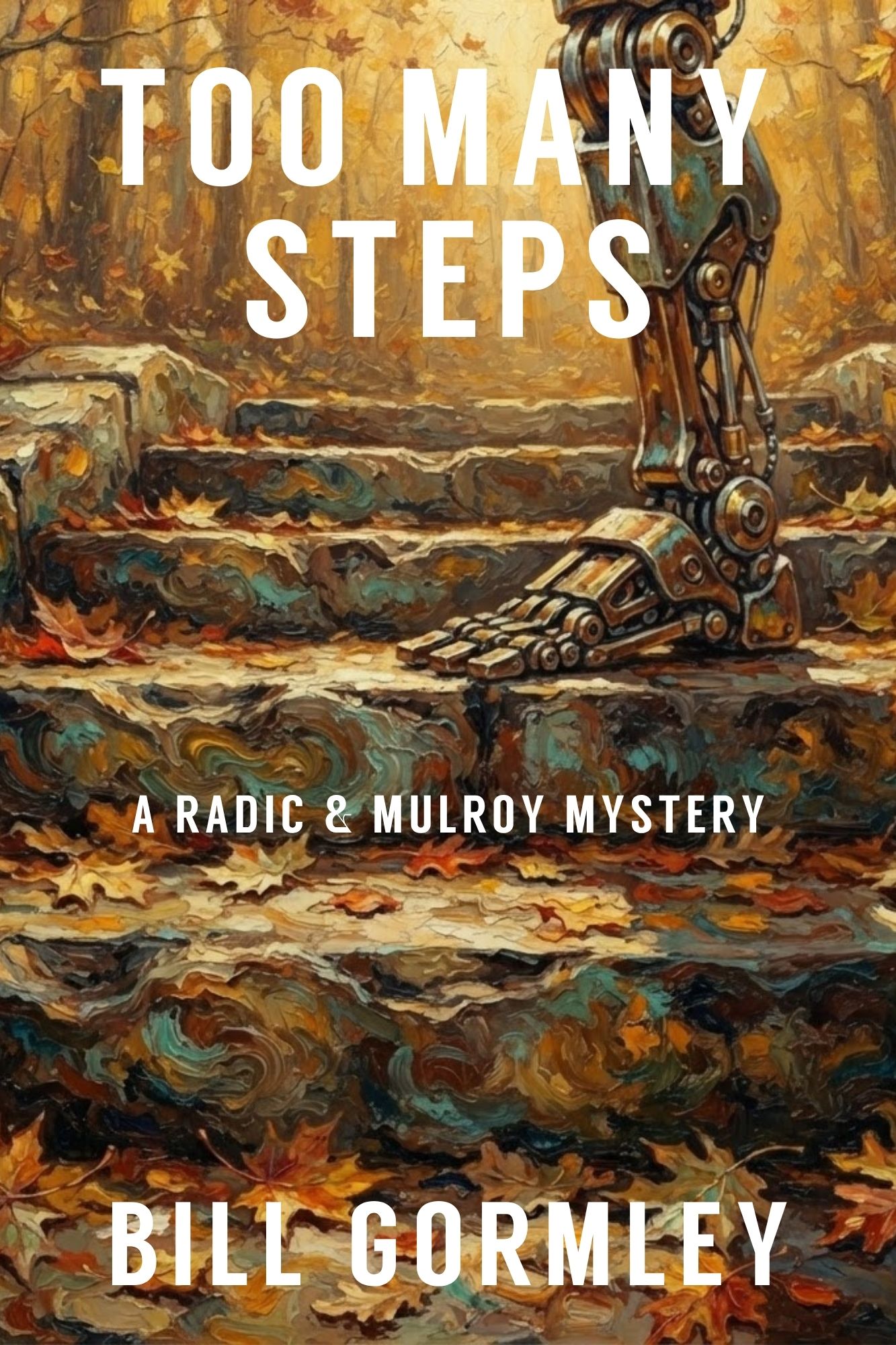
A Radic & Mulroy Mystery
When an eccentric British developer proposes to replace Pittsburgh’s historic South Side Slopes steps with an open-air escalator, citizen activists organize a strong political protest. A bitter public relations battle erupts in television ads, featuring Ella, a robot who will be part of the construction crew. Days later, the leading opponent of the escalator is shot to death while jogging the steps. An eyewitness claims that the killer was a robot. Detectives Branko Radic and Kathleen Mulroy must separate fact from fiction without a key witness – Ella has gone missing. With help from a geeky robotics student, a psychiatrist, and a government spy, they try to track down the killer and solve the case. But some Russian thugs have other plans.
Praise for Too Many Steps:
“Too Many Steps starts out as a fun procedural set in working-class Pittsburgh, and then makes a delightful left turn into the world of killer robots, Russian terrorists, and greedy oligarchs. All the main characters are well drawn and easy to root for, but Ella, the dancing robot who may or may not have murdered two people, steals the show.”
~ Matt Witten, bestselling author of 51%
Book Details:
Genre: Police Procedural
Published by: Level Best Books
Publication Date: October 6, 2026
Number of Pages: 293 pbk
ISBN: 979-8898202910 pbk
Series: A Radic & Mulroy Mystery, Book 3 || Each is a stand-alone
Book Links: Amazon | Kindle | Barnes & Noble | BookShop.org | Goodreads | BookBub
Read an excerpt:
Chapter One
Man with a Mission
The most predictable thing about ascending Pittsburgh’s South Sides Slopes was the pain. If Gabriel Peña climbed the entire set of steps in one vigorous sprint, it hurt his legs, his ankles, and his back. He felt every step. He might even need to extract an ice pack from the freezer when he got home.
But it also felt fantastic when he got to the top. A view that belonged on a postcard, especially with fall colors at their peak. Gleaming skyscrapers above, three meandering rivers below. The homes of the Steelers and the Pirates just beyond the Allegheny River. A view to die for.
If he took his usual route, on the St. Thomas Street steps, he often encountered surprises along the way. Sometimes a pileated woodpecker pecking away at an elm tree on Hackstrom Street. Sometimes an impromptu game of kickball on Monastery Avenue. Sometimes another jogger or walker heading the other way, sharing a smile of recognition while savoring the same almost spiritual experience.
As Peña jogged briskly up the steps, panting softly, he thought about how much his life had changed since a wealthy billionaire proposed replacing his beloved steps with an escalator – an escalator that promised economic development but would radically transform several South Side communities.
Peña first publicly opposed the escalator at a public hearing before the City Council several months ago. As a physical therapist, he knew the value of cardio-vascular exercise. As the president of the South Side Runners Club, he knew the thrill that joggers experienced as they climbed the slopes from the bottom to the top.
For starters, this is what he said: “The electric Stairway to Heaven is a Stairway to Hell that threatens multiple neighborhoods, multiple businesses, multiple residents, and a slice of history. The Southside Slopes steps were the steps that steelworkers descended during World War II when they left their homes to work at the Jones and Laughlin Steel Mill in the valley below.”
He was blunt: “An escalator is a hare-brained idea that could easily go wrong in a hundred different ways. It’s uncertain, unpredictable. What’s certain is that an escalator would end the tradition of walking or jogging up and down the South Side Slopes and would place new stress on existing neighborhoods. If you do it, expect gentrification as the price of real estate rises. Expect the demolition of affordable duplexes to make way for high-rise apartments. Expect the demolition of neighborhood businesses to make way for a shopping mall. Pittsburgh deserves better.”
He closed with this thought: “Pittsburgh has more public staircases than any city in the United States. Most of them are located in mid-to-moderate income neighborhoods. These are public treasures that ordinary citizens can enjoy. Instead of destroying the steps, we should celebrate them!”
After the meeting, Peña was approached by several well-wishers, who congratulated him for saying exactly what was in their hearts. He was also approached by an aide to Councilman Virgil Waters, an opponent of the escalator project, who suggested that they meet the following day. He wanted to strategize about how to mobilize citizen opposition.
Since then, Peña’s life had been a whirlwind. Lots of planning meetings, followed by leaflets, protests, social media memes, and conversations with politicians. He organized a group called PAUSE: People Against the Use of Stupid Escalators. He gave numerous interviews to newspaper reporters and TV news crews. He plotted, strategized, and mobilized his fellow citizens.
Then the empire struck back with a series of clever TV ads and social media posts. At first, his side took it on the chin. But soon they decided to use similar tactics, which proved devastatingly effective. The escalator project was now on the ropes. David was about to slay Goliath.
***
Glancing at his watch the following morning, Peña realized that he was running late. He needed to start work at 7:30 a.m. sharp if he was to leave the office in time to attend a rally at 5 o’clock at the South Side Market House. As the featured speaker, he absolutely needed to be there. But his moments with his daughter Chiquita were so precious that he yearned to stretch each and every one of them. Having just turned two, Chiquita was attentive, inquisitive, and utterly adorable.
After feeding her breakfast, he gave her horseback rides from one end of the living-room to the other. Then he hid a wrapped treat in one of the shoes that lay at the entrance to their home. He always put the treat in the smallest shoe he could find, making its discovery easier. In time, he would ratchet up the level of difficulty and make it just a bit harder.
Before leaving, Peña gave Chiquita some loud belly kisses that made her laugh and squirm. For good measure, he clasped his palms together and pumped, producing exquisite farting noises that made her squeal with delight. Peña sometimes felt a lump in his throat when he said good-bye to Chiquita in the morning. There were times when he wished he was a stay-at-home dad.
Thanks to little traffic, Peña made it to work on schedule. He parked two blocks away from his workplace – Pivot Physical Therapy on Baum Boulevard in East Liberty. His first client, recovering from a torn rotator cuff, was to see him at 7:45 a.m. He would start him on some pendulum swings, some crossover arm stretches, and some resistance band exercises. Then maybe some wall slides, doorway stretches and lawnmower pulls.
In between clients, Peña texted his wife Jacinta, Councilman Waters, and others. At times, he also did some exercises, practicing what he preached. It helped him to empathize with his clients and to fine-tune his advice. Throughout the day he observed clients closely, cataloguing sub-optimal moves so he could teach them to get the maximum benefit from their hard work.
Peña liked to joke at work. When observing one client do some cat cows, he chided: “More cat, less cow.” When working with grandparents, he’d learn the names of their grandchildren and use this to goad them: “Do ten more push-ups for Caitlin, Greg. Caitlin is counting on you!”
Peña left work at 4:30 p.m. and arrived at the rally with ten minutes to spare. The size of the crowd was encouraging. Ever since Peña launched his protest against the proposed outdoor escalator, opposition to the project had grown dramatically. The original nucleus consisted of members of Peña’s weekend running club – joggers, physical fitness fans, people committed to a healthy lifestyle. As Peña highlighted the threats posed to South Side’s hilly neighborhoods, residents and community activists also joined in. Peña convinced them that their community and its way of life were under attack. Shortly thereafter, a couple of City Council members signed up for the cause, and they were off to the races.
The “evil genius” behind the escalator, Oliver Sappington, was said to be furious. According to newspaper accounts, he thought the protest would fizzle out and the prospect of economic development would be alluring enough to win the City Council’s support. But opposition to the “Stairway to Hell” had grown at an “escalating” rate, as one journalist put it. Spurred by rising opposition, Sappington and his team decided to hire a pricey P.R. firm to get their message across. The key to their media strategy was Ella – a beguiling creature who was said to be one of Sappington’s favorite robots.
In some slick TV ads, Ella, who supposedly would help to build the escalator, lifted some metallic slabs onto a construction site, looked directly at the camera, and spoke in a sexy voice: “Pittsburgh is a world-class city and it deserves a world-class transportation system. Let me help you to fulfill your wildest dreams.” Insiders knew that Ella’s voice was dubbed. She didn’t actually speak. Still, Ella’s sales pitch proved persuasive. The polls began to shift in Sappington’s direction. A pro-steps councilman suddenly became pro-escalator, bringing a decisive yes vote within reach.
Peña and his backers, meeting in his kitchen while Jacinta served fish tacos and frijoles negros, decided to fight fire with fire. They hired their own P.R. firm, which recruited a Cleveland-based robot named Elvis to play a cameo role. Elvis, another Sappington-built robot, resembled Ella enough to be her plausible twin and was chosen to portray her in the ad. While Peña confidently ran up the South Side Slopes steps, Elvis followed sluggishly behind, unable to keep pace. “Anything Ella can do, I can do better,” Peña said, with a grin on his face. “Pittsburgh is already a world-class city, with world-class neighborhoods like the South Side Flats and the South Side Slopes. We don’t need a bunch of robots coming in and telling us how to run our city.”
Refocusing on the rally, Peña took stock. Judging from the number of people and TV news crews, the new TV ads were working their magic. All they needed now was a little more political pressure and Sappington’s Folly would be history. Perhaps this rally would put the nail in the coffin.
***
Excerpt from Too Many Steps by Bill Gormley. Copyright 2026 by Bill Gormley. Reproduced with permission from Bill Gormley. All rights reserved.
Author Bio:
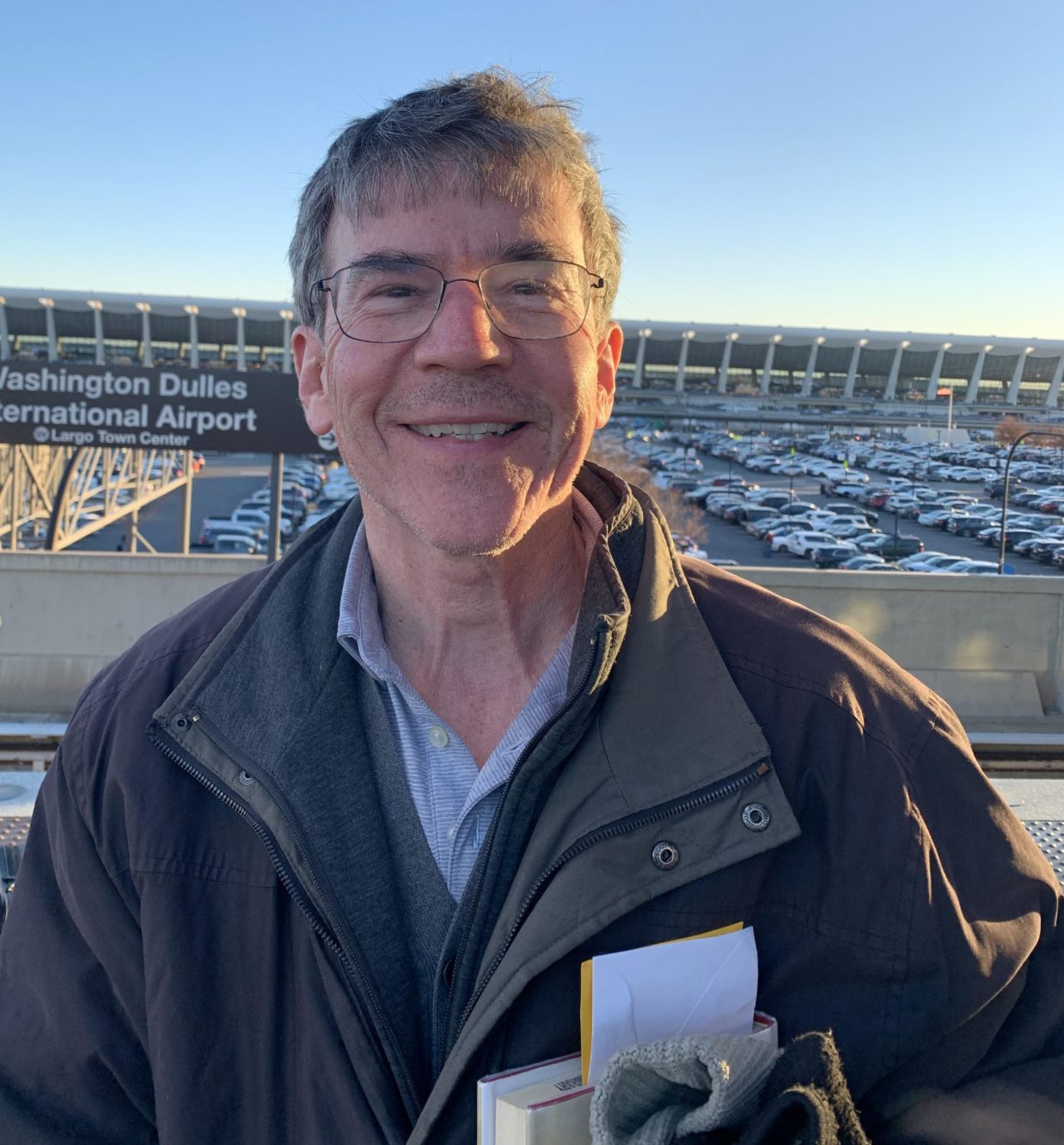
Bill Gormley is University Professor of Public Policy Emeritus at Georgetown University, where he taught for 33 years. He is the author of two murder mysteries featuring Radic and Mulroy — Too Many Bridges and The Silent Trumpet. His monthly podcast, Profs on Cops, features conversations with prominent criminologists and social scientists about police practices and crime.
Catch Up With Bill Gormley:
www.BillGormley.com
Amazon Author Profile
Goodreads
BookBub – @gormleyw
Facebook
Tour Participants:
Tour Host Info:
Book Formats: ePub, Print
Hosting Options: Review, Interview, Guest Post, Showcase
Giveaway: There will be a tour-wide PICT Giveaway
More: According to the author Too Many Steps is considered to be PG-level content or less. Readers may still encounter potentially sensitive material. If you have specific trigger or content concerns, please contact Partners in Crime Tours directly for more detailed information.